


The Carter Center is a 501(c)(3) charity (tax ID# 58-1454716).
One Copenhill | 453 John Lewis Freedom Parkway NE | Atlanta, GA 30307
(404) 420-5100 | info@cartercenter.org
Copyright © 2026 The Carter Center.


result

Peace Programs
Peace Programs
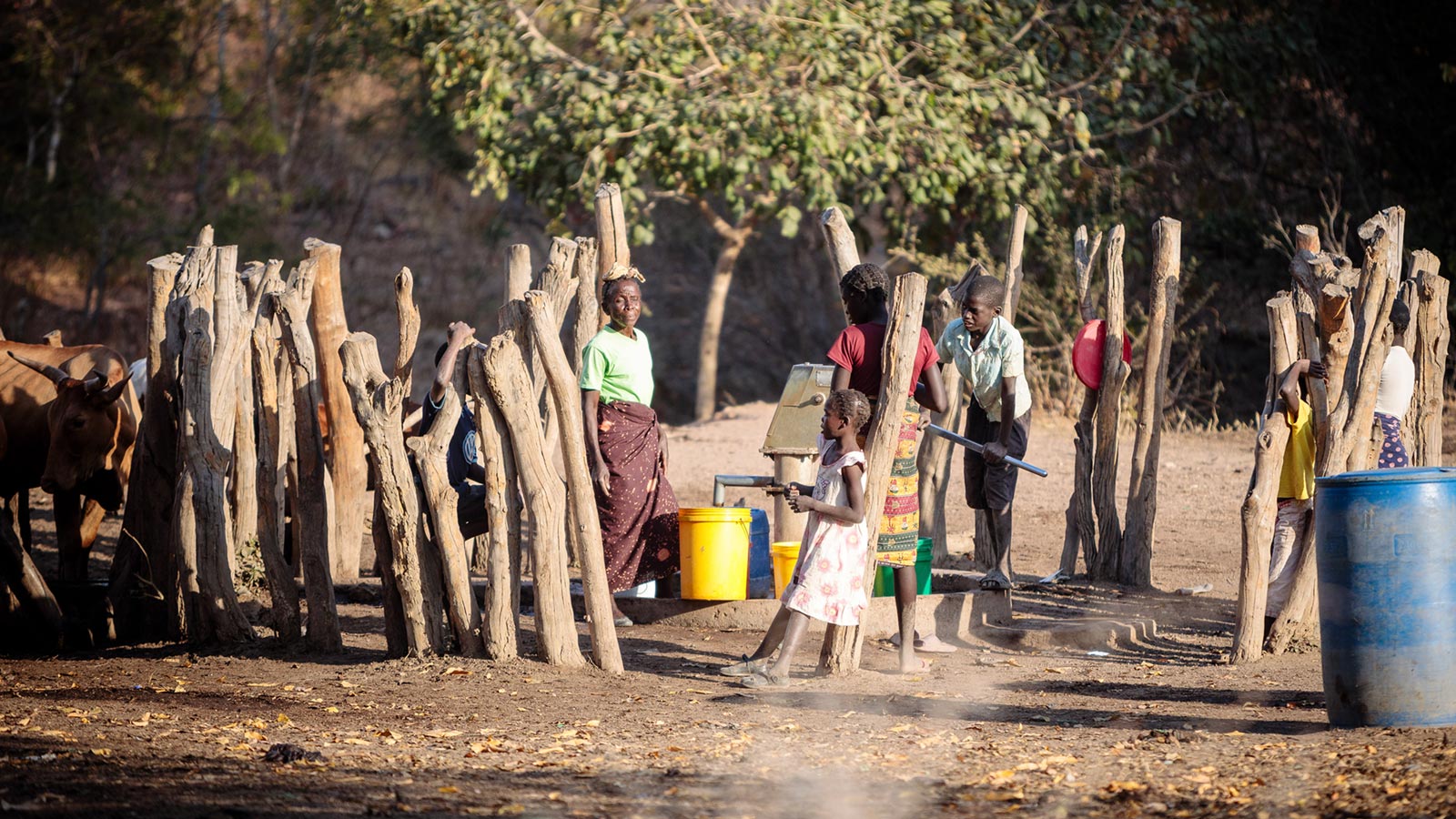
These women and children belong to a Zambian community where The Carter Center is raising awareness about climate change and finding ways to counter its impact.
OVERVIEW
Democracy Program
The Carter Center continued to support governance and election integrity worldwide, including in the U.S. It observed Guyana’s September 2025 elections, deploying 47 observers across the country, and conducted assessment missions in Bangladesh, Colombia, Honduras, and Peru. In Montana and New Mexico, it supported nonpartisan election observation networks to train approximately 150 volunteers to monitor local elections. Support for citizen observation continued in the Democratic Republic of the Congo, where partners trained more than 1,600 people in election monitoring. In Zambia, the Center worked with local organizations to improve participatory rights for women and youth. An expert team reported on the Sudan conflict, convening Sudanese experts to develop a vision document for the country’s future. The Center collaborated with Sri Lankan organizations to train 126 women leaders on digital safety and media literacy.
Conflict Resolution Program
In Arizona, Florida, Georgia, Michigan, North Carolina, and Wisconsin, The Carter Center brought together 3,600 people in its Democracy Resilience Networks, state-based cross-partisan organizations whose members work to build trust in electoral processes and mitigate political polarization. In Mali, Carter Center programming contributed to more stable communities by expanding health access for more than 480,000 people and helping to reopen a school for 400 children. In Benin and Côte d’Ivoire, the Center strengthened resilience against climate and conflict through mediation, governance training, and support for women-led initiatives. With support from the Center, Sudan’s Youth Citizen Observer Network transitioned to youth-led ownership as an independent nonprofit. In Israel-Palestine, the Center collaborated with partner REFORM to organize 40 psychosocial support sessions for 608 women and children facing ongoing hardship in Gaza. In Syria, mapping of unexploded ordnance helped demining organizations, while Center-supported local partners educated children about mine risk and countered hate speech through a youth-led campaign.
Guyanese citizens wait in line to vote.
Pivotal Elections in Guyana
The Guyanese people went to the polls on Sept. 1, 2025, and The Carter Center dispatched nearly 50 international election observers across the South American country. It was the sixth election the Center has observed in Guyana, and it came at a pivotal time in the multiethnic — and often ethnically divided — country’s history.
The stakes felt especially high for Guyanese voters in the capital city of Georgetown, given disputes around its last presidential election and its newfound wealth and development since the discovery of offshore oil in 2015.
“Elections are a steppingstone toward democratization,” said election observer Sasha Pajevic of Montenegro. “Voters trust the transparency and validity of elections more when international organizations are present.”
LEARN MORE IN THIS VIDEO
Human Rights Program
In Colombia, Serbia, and Zambia, The Carter Center provided small grants to local organizations working to strengthen efforts led by human rights defenders. The program is set to expand into four additional countries. The recently launched SheRise project provided $60,000 grants to three organizations working across four provinces in Zambia, bolstering women environmental rights defenders’ participation in climate change decision-making. In the Democratic Republic of the Congo, The Carter Center convened experts to identify unique threats against defenders of environmental, land, and Indigenous rights, which will be addressed by the protection networks the Center helped establish beginning in 2010. During a visit to the Democratic Republic of the Congo, CEO Paige Alexander participated in the launch of the renewed, seven-year Women’s Voice and Leadership project.
Rule of Law Program
The Carter Center led a study tour to Poland, where U.S. legal practitioners working to advance democracy met European counterparts who offered practical approaches to counter democratic backsliding. To promote data transparency and access to information, the Center supported the development of two public data dashboards: one that shares successes in advancing alternatives to policing in Atlanta, and another that provides real-time data on sexual and gender-based violence cases in Sierra Leone, aiming to improve response and prevention efforts. In Guatemala, the Center convened 28 representatives from civil society, government, and donor agencies to strategize about the use of networks, protection mechanisms, and digital literacy to counter the increasingly restrictive civic space in the region. The Center also partnered with Latin American and Caribbean police academies to host five in-person and virtual events, which brought together more than 1,100 law enforcement officers from six countries to exchange good practices and lessons learned while promoting gender equality in police training.
In the Democratic Republic of the Congo, The Carter Center is helping women become community leaders.
Congolese Women Take Charge
In the Democratic Republic of the Congo, inequality and violence have long threatened its most vulnerable populations and kept their voices far from the halls of power. But the Congolese people are standing up for human rights and fighting for democratic participation — and The Carter Center is standing with them.
Women are at the forefront. In Tanganyika province, where political instability and conflict have made it difficult for women to be heard, a new project is bringing together a diverse cross-section of women from the region, uniting individuals into a collective body that now advises political parties and local government. Their influence is growing: Seven members have reached decision-making positions, including a provincial minister, a city mayor, four division heads, and an elected representative.
Also in Tanganyika, listening clubs, discussion groups, and literacy centers have been established to bring together women from different Indigenous groups to break down cultural barriers, fight discrimination, and increase their participation in community decision-making.
In the DRC, women aren’t waiting for change to come to them. They’re leading it.
In the DRC, women aren’t waiting for change to come to them. They’re leading it.
LEARN MORE IN THIS VIDEO
Other Initiatives
China Focus
The second Jimmy Carter Forum on U.S.-China Relations was held in March 2025 in Hangzhou, China. Then in August, the Emerging Voices for U.S.-China Cooperation conference, held in San Francisco, convened the next generation of peace advocates and experts. The Center’s surveys of Chinese public opinion earned extensive global media coverage, including features in The Economist, NBC News, and NPR, helping establish The Carter Center as one of the only reliable sources of Chinese public opinion research in the world. The Center’s English and Chinese publications on U.S.-China relations received almost 750,000 views.
Inform Women, Transform Lives
In 2025, The Carter Center added 13 cities to the Inform Women, Transform Lives initiative, which establishes partnerships with city leaders around the globe to help them provide women with information about beneficial municipal services. Since 2021, the Center has partnered with 48 cities, reaching a metropolitan population of 265 million people across five continents. The campaign has had great success, including in Montevideo, Uruguay, which recently completed its activities, reporting a 163% increase in in-person consultations provided by the city’s gender-based violence service over the course of its campaign. The Glasgow, Scotland, campaign saw more than 100,000 downloads of an app to educate young women about intimate partner violence and reported a 200% increase in young women seeking help. And in Freetown, Sierra Leone, a campaign to raise awareness about new waste management services took off, with households registering for the services increasing by nearly 425% in its first three months.
Latin American and Caribbean Focus
The Carter Center partnered with COMPAZ, the foundation of former Colombia President and Nobel Peace Laureate Juan Manuel Santos, on “Peace and Democracy: Perspectives for Colombia and the World,” in honor of the Center’s commitment to the implementation of the 2016 peace accord that ended a 52-year civil war. The Carter Center, as an affiliate of the Organization of American States, participated in Permanent Council meetings on crises in the region and in the agenda-setting for the organization’s General Assembly. The Carter Center monitored developments and engaged in diplomatic efforts to address the crisis in Venezuela following the disputed 2024 presidential election, during which the Center had been the only independent observer mission.
A courtyard meeting in the Rangamati District of Bangladesh brings together community members eager to improve their lives through access to government information.
Turning Information Into Opportunity
Women in Bangladesh need information to exercise their rights and grow. Without it, they may be wrongfully charged for healthcare services, miss out on training programs to gain marketable skills, or fail to access government funds that are there for them and their communities.
A decade ago, The Carter Center launched a project to advance women’s rights to information in Bangladesh. The program expanded to remote areas in 2023 to reach the most marginalized women. Loss of funding from the U.S. Agency for International Development halted services, but The Carter Center is determined to find new funding partners to renew the full scope of its efforts.
“Information changed these women′s lives,” said Shammi Laila Islam, the Center’s acting country representative in Bangladesh. “It empowered them to achieve more for themselves and the people around them.”